Table of Contents
Technology is changing faster than ever before. From artificial intelligence and smart devices to cloud computing, automation, extended reality, and advanced connectivity, modern technology is becoming a central part of everyday life. The digital world is no longer limited to computers and smartphones. It now connects homes, businesses, industries, vehicles, healthcare systems, financial services, educational institutions, and cities.
The future of technology will be shaped by the combination of intelligent software, connected devices, automation, data, and human creativity. Artificial intelligence is becoming increasingly capable of understanding information, generating content, supporting decision-making, and automating repetitive tasks. At the same time, technologies such as the Internet of Things, cloud computing, 5G, edge computing, robotics, augmented reality, and virtual reality are creating new possibilities for how people interact with digital systems.
Understanding the future of technology is important not only for technology professionals but also for students, businesses, creators, and everyday users. As digital transformation continues, knowing the major technology trends can help people understand how the digital world is evolving and how these changes may affect their lives and work.
What Is the Future of Technology?
The future of technology refers to the emerging innovations and technological developments that are expected to influence how people live, work, communicate, learn, and conduct business. It includes technologies that are already developing today as well as innovations that may become more common in the coming years.
Artificial intelligence, machine learning, automation, cloud computing, IoT, robotics, advanced connectivity, cybersecurity, blockchain, augmented reality, and virtual reality are among the technologies contributing to this transformation.
The future is not based on one single technology. Instead, different technologies are increasingly working together. For example, artificial intelligence can analyze data collected by IoT devices, cloud platforms can process and store that information, and edge computing can help process important data closer to where it is generated.
This combination of technologies is creating a more connected and intelligent digital world.
How AI Is Shaping the Future of Technology
Artificial intelligence is one of the most important technologies influencing the future of technology. AI systems can process large amounts of information, recognize patterns, generate content, assist users, and support decision-making.
AI and Machine Learning
Machine learning allows computer systems to learn from data and improve their performance without being explicitly programmed for every individual task. It is already used in areas such as recommendation systems, fraud detection, image recognition, customer service, cybersecurity, and predictive analytics.
As machine learning continues to develop, businesses may increasingly use intelligent systems to analyze information and make faster data-driven decisions.
Generative AI
Generative AI has introduced another major change in the digital world. These systems can generate text, images, audio, video, software code, and other forms of digital content based on user instructions.
Generative AI is being explored for content creation, education, marketing, software development, research, customer support, and many other applications. However, responsible use remains important because AI-generated information can sometimes contain errors, bias, or misleading information.
AI Automation
Automation combined with artificial intelligence can reduce the amount of repetitive manual work involved in many processes. Businesses can use intelligent automation for customer support, document processing, data analysis, workflow management, marketing operations, and other routine activities.
The future of automation is therefore not simply about replacing manual tasks. It is also about helping people spend more time on creative, strategic, and human-centered work.
AI in Everyday Life
AI is already present in many everyday technologies. Voice assistants, smartphone cameras, recommendation engines, navigation applications, spam filters, translation tools, smart home systems, and personalized online services can all use forms of artificial intelligence.
As AI becomes more integrated into everyday products, users may interact with intelligent systems without always realizing that AI is working behind the scenes.
Key Technology Trends Shaping the Digital World
Several emerging technologies are working together to create the next generation of the digital world. These technologies are not isolated developments. Their combination is creating new digital experiences and business models.
For a broader overview of current technology developments, you can also explore Top 10 Digital Trends.
Internet of Things (IoT)
The Internet of Things connects physical devices to the internet so they can collect, exchange, and process information. Smart watches, connected home appliances, industrial sensors, security systems, and smart vehicles are examples of IoT applications.
IoT can help businesses monitor equipment, improve operational efficiency, and collect useful data. In homes, connected devices can automate lighting, security, temperature control, and other functions.
The future of IoT will depend heavily on reliable connectivity, cloud infrastructure, edge computing, and strong cybersecurity.
Cloud Computing
Cloud computing has transformed the way individuals and organizations store data and use software. Instead of depending entirely on local hardware, users can access computing resources, applications, databases, and storage through internet-based platforms.
Cloud technology supports remote work, online collaboration, software-as-a-service platforms, data analytics, artificial intelligence, and many modern digital services.
As businesses continue to move toward digital operations, cloud computing will remain an important part of the technology infrastructure supporting the digital world.
5G and Advanced Connectivity
Fast and reliable connectivity is essential for the future of digital technology. 5G networks can provide higher speeds, lower latency, and improved connectivity for supported devices and applications.
Advanced connectivity can support applications such as connected vehicles, smart cities, remote services, industrial IoT, immersive digital experiences, and real-time communication.
Future developments in wireless connectivity may further improve the way devices and systems communicate with each other.
Edge Computing
Edge computing processes data closer to where it is generated rather than sending every piece of information to a centralized cloud environment.
This approach can help reduce latency and improve response times for applications that require fast processing. It can be useful for industrial systems, connected vehicles, smart devices, healthcare technologies, and other real-time applications.
Edge computing and cloud computing are likely to work together rather than replace one another. Some workloads can be processed locally while others can continue to use centralized cloud infrastructure.
Robotics and Automation
Robotics is another important part of the future of technology. Robots are already used in manufacturing, logistics, healthcare, agriculture, warehouses, and other industries.
Modern robotics increasingly combines sensors, artificial intelligence, computer vision, and automation. This allows robots to perform more complex tasks and interact with changing environments.
In the future, robots may become more common in both industrial and service environments, although their adoption will depend on cost, safety, reliability, and practical requirements.
Blockchain Technology
Blockchain provides a distributed way of recording transactions and information. It became widely known through cryptocurrencies, but its underlying technology has also been explored for areas such as digital identity, supply chain management, verification, and decentralized applications.
Its future development will depend on factors such as scalability, regulation, security, energy use, and real-world adoption.
The Role of Smart Technology
Smart technology refers to connected devices and systems that can collect information, communicate with other systems, and sometimes make automated decisions.
Smart Homes
Smart home technology allows devices such as lights, security cameras, thermostats, speakers, and appliances to communicate through connected systems.
Users can control many devices through smartphones or voice interfaces. Automation can also allow devices to respond to specific conditions or schedules.
As smart home ecosystems become more integrated, cybersecurity and privacy will remain important considerations.
Smart Cities
Smart city technology uses connected infrastructure and data to improve urban services. Traffic management, public transportation, energy systems, waste management, environmental monitoring, and public safety can all involve digital technologies.
The goal of smart city development is not simply to add more technology. Effective systems should use technology to solve practical problems while considering privacy, accessibility, security, and the needs of citizens.
Smart Devices and Connected Systems
Smartphones, wearables, smart televisions, connected vehicles, and other devices are becoming part of larger digital ecosystems.
The ability of different devices to communicate and share information can make digital experiences more convenient. However, greater connectivity also increases the importance of data protection and cybersecurity.
How Technology Is Transforming Different Industries
The future of technology will affect almost every major industry.
Healthcare
Healthcare is increasingly using digital technologies for medical records, remote consultations, diagnostic support, medical imaging, wearable devices, and data analysis.
Artificial intelligence can assist professionals by identifying patterns in medical data, while connected devices can help collect information about patients. However, healthcare technology requires strong privacy, security, accuracy, and regulatory safeguards.
Education
Technology has changed how students access information and communicate with teachers. Online learning platforms, digital classrooms, educational applications, interactive content, and AI-powered learning tools can support different learning environments.
The future of education may involve more personalized digital learning experiences, but technology should complement effective teaching rather than completely replace human interaction.
Business
Businesses are using technology for communication, customer management, marketing, analytics, automation, online sales, and internal operations.
AI-powered tools can help analyze business information and automate repetitive workflows. Cloud platforms allow teams to collaborate from different locations, while digital analytics can help organizations understand customer behavior.
Finance
Financial institutions use technology for online banking, digital payments, fraud detection, risk analysis, automated services, and financial data processing.
As financial services become increasingly digital, cybersecurity and data privacy will remain essential.
Manufacturing
Manufacturing is becoming more automated through robotics, IoT sensors, artificial intelligence, computer vision, and connected production systems.
Smart manufacturing can help organizations monitor equipment, identify potential problems, improve production efficiency, and reduce unnecessary downtime.
Retail
Retail technology includes online shopping, digital payments, recommendation systems, inventory management, customer analytics, and automated support.
The combination of physical and digital shopping experiences is creating new ways for customers to discover, compare, purchase, and receive products.
Transportation
Technology is transforming transportation through navigation systems, connected vehicles, logistics platforms, electric vehicles, automation, and intelligent traffic systems.
Future transportation systems may become increasingly connected, data-driven, and automated.
Augmented Reality and Virtual Reality
Augmented reality and virtual reality are two technologies changing how people interact with digital environments.
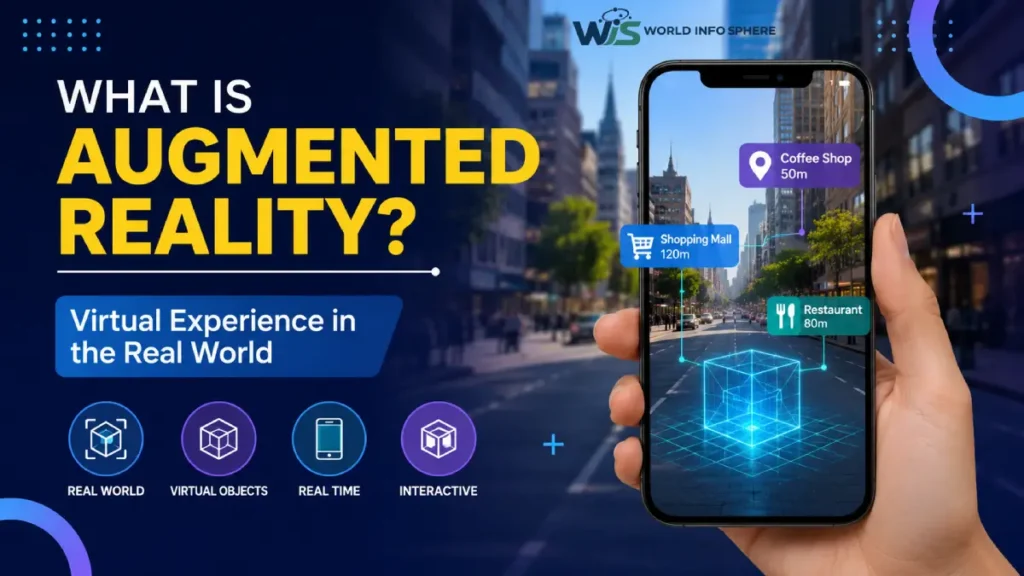
Augmented Reality (AR) adds digital information or virtual elements to the real-world environment. Smartphones, smart glasses, educational applications, retail experiences, and industrial tools can use AR to provide additional digital information.
Virtual Reality (VR) creates an immersive digital environment that users can experience through compatible devices such as VR headsets.
AR and VR in Education and Business
AR and VR can provide interactive learning experiences, simulations, product demonstrations, employee training, virtual meetings, and immersive presentations.
For example, students can explore virtual environments while businesses can use simulations to train employees without requiring them to work directly with expensive or potentially dangerous equipment.
The future of immersive technology will depend on factors such as hardware costs, accessibility, comfort, content quality, and practical applications.
Cybersecurity in the Future Digital World
As technology becomes more connected, cybersecurity becomes increasingly important. More devices, applications, accounts, and digital services mean there are more systems that need protection.
Growing Cybersecurity Challenges
Cyber threats can include phishing, malware, ransomware, identity theft, social engineering, account attacks, data breaches, and other forms of digital abuse.
Individuals and organizations need to understand that cybersecurity is not only a technical issue. Human behavior also plays an important role.
For practical guidance on protecting personal information and accounts, see How to Stay Safe Online.
AI and Cybersecurity
Artificial intelligence can support cybersecurity by identifying unusual behavior, analyzing large volumes of security information, detecting suspicious activity, and helping security teams respond to threats.
At the same time, attackers can also use automation and AI-related technologies to improve certain types of cyber attacks. This makes continuous security awareness and strong protection practices increasingly important.
Data Privacy
The growing use of connected devices and digital services means that large amounts of personal and business information are being collected and processed.
Privacy therefore needs to be considered when developing and using technology. Users should understand what information applications collect, why it is collected, and how it is protected.
Organizations also need appropriate security controls, access management, encryption, monitoring, and privacy practices to reduce unnecessary risks.
Benefits of Future Technology
Future technology can create significant benefits for individuals, organizations, and society.
Technology can improve productivity by automating repetitive processes and providing faster access to information. Digital communication allows people to collaborate across geographical boundaries. Cloud platforms make many digital services easier to access, while AI can assist with analysis, content creation, and decision support.
Technology can also improve accessibility. Digital tools can help people communicate, learn, work, and access services in ways that were previously difficult or unavailable.
In industries such as healthcare, education, manufacturing, transportation, and finance, technology can create new opportunities for efficiency, innovation, and improved user experiences.
However, these benefits depend on responsible implementation and appropriate safeguards.
Challenges of Future Technology
The future of technology also brings important challenges.
Privacy is one major concern because connected systems can collect large amounts of personal information. Cybersecurity is another challenge because more connected devices can create more opportunities for attacks.
The digital divide is also important. Not everyone has equal access to high-speed internet, modern devices, digital education, or advanced services.
Automation may also change job roles and create demand for new skills. This makes continuous learning and digital education increasingly important.
Another challenge is misinformation and unreliable digital content. As AI-generated and digitally manipulated content becomes more accessible, users need stronger digital literacy skills to evaluate information critically.
Technology development therefore needs to consider not only innovation but also security, privacy, accessibility, education, and responsible use.
What Will the Digital World Look Like in the Future?
The future digital world will likely be more connected, intelligent, and automated than today.
People may interact with technology through a combination of smartphones, wearables, voice interfaces, smart environments, immersive devices, and AI-powered assistants.
Businesses may rely more heavily on cloud platforms, automation, analytics, AI, and connected systems. Smart infrastructure may become more common in cities, while digital services may become increasingly personalized.
However, the exact future cannot be predicted with certainty. Some technologies may grow rapidly, while others may remain limited to specific industries or applications.
The most important trend is the increasing integration of different technologies. AI, cloud computing, IoT, connectivity, robotics, cybersecurity, and immersive technologies are likely to work together to create increasingly complex digital ecosystems.
How Businesses Can Prepare for Future Technology
Businesses that want to adapt to technological change should focus on building strong digital foundations rather than simply adopting every new technology.
Organizations can begin by identifying practical business problems that technology can solve. They can then evaluate suitable digital tools, improve data management, train employees, and strengthen cybersecurity.
Businesses should also monitor emerging technology trends and understand how competitors and customers are changing. Digital transformation should be connected to clear business goals rather than being driven only by technology hype.
Employee training will become increasingly important because new technologies often require new skills. Organizations that invest in continuous learning can help their teams adapt to changing digital environments.
How Individuals Can Prepare for Future Technology
Individuals can also prepare for the future by developing digital skills and maintaining a habit of continuous learning.
Learning the fundamentals of artificial intelligence, cybersecurity, cloud computing, digital communication, data literacy, and other relevant technologies can help people understand changes in the modern workplace.
It is also important to develop critical thinking skills. Not every new technology is useful for every situation, and not every piece of information found online is reliable.
People should also practice basic cybersecurity habits such as using strong passwords, enabling multi-factor authentication where available, keeping software updated, and being careful with suspicious links and messages.
The ability to learn and adapt may become one of the most valuable skills in an increasingly technology-driven world.
Also read this post:
What is Technology? Trends, AI Technology and Latest News
Types of Artificial Intelligence (AI): Complete Beginner Guide
Top Free AI Tools You Must Use in 2026 for Productivity
Conclusion
The future of technology will be shaped by more than individual inventions. It will come from the growing connection between artificial intelligence, data, cloud computing, IoT, advanced connectivity, automation, robotics, cybersecurity, and immersive digital experiences.
These technologies are already changing how people communicate, learn, work, shop, travel, and access services. As they continue to develop, the digital world is likely to become more connected and intelligent.
At the same time, technological progress needs to be balanced with privacy, security, accessibility, digital literacy, and responsible use. Understanding both the opportunities and challenges of emerging technology can help individuals and businesses make more informed decisions.
The future of technology is ultimately about how people use innovation to solve real problems and create better digital experiences. As technology continues to evolve, the ability to understand, adapt, and use it responsibly will become increasingly important.
Latest post:
Vivo X300 FE Specifications & Features (2026 Full Review)
What is Technology? Trends, AI Technology and Latest News
FAQs – About Future of the Digital World
What is the future of technology?
The future of technology refers to emerging innovations that are expected to influence how people live, work, communicate, learn, and conduct business. Artificial intelligence, IoT, cloud computing, robotics, advanced connectivity, cybersecurity, AR, and VR are some of the major areas shaping this future.
How is AI changing the future of technology?
AI is changing technology by enabling systems to analyze information, recognize patterns, generate content, automate tasks, and support decision-making. Its applications are expanding across business, education, healthcare, finance, cybersecurity, and everyday digital services.
What technologies will shape the digital world?
Several technologies are expected to contribute to the future digital world, including artificial intelligence, machine learning, cloud computing, IoT, 5G, edge computing, robotics, blockchain, augmented reality, virtual reality, and cybersecurity.
Why is cybersecurity important for future technology?
As more devices, services, and systems become connected, the amount of digital information that needs protection also increases. Strong cybersecurity practices can help protect personal information, business data, digital accounts, and connected systems.
Will technology replace human jobs?
Technology can automate certain tasks and change the way many jobs are performed, but it can also create new roles and demand for new skills. The impact will vary by industry, occupation, and the specific technologies adopted.
How can people prepare for future technology?
People can prepare by developing digital skills, learning about emerging technologies, improving cybersecurity awareness, practicing critical thinking, and continuing to learn as technology changes.