Introduction
If we look at how students are studying in 2026, it is very different from the past. Learning is no longer limited to textbooks, notebooks, and classroom lectures. Today, students are learning through AI tools, mobile apps, smart classrooms, and online platforms.
When we check real search behavior on Google, people are mostly searching for:
- AI in education 2026
- digital tools for students learning
- how technology is changing education
- online learning vs traditional learning
- future of education system
This clearly shows one thing: students and parents want to understand how digital tools and AI are changing education.
Let’s explore this in a simple, real-life way.
1. Education is Becoming More Digital Than Ever
In 2026, education has shifted from physical-only learning to a mix of digital and classroom learning.
Students now use:
- AI-based learning apps
- Online education platforms
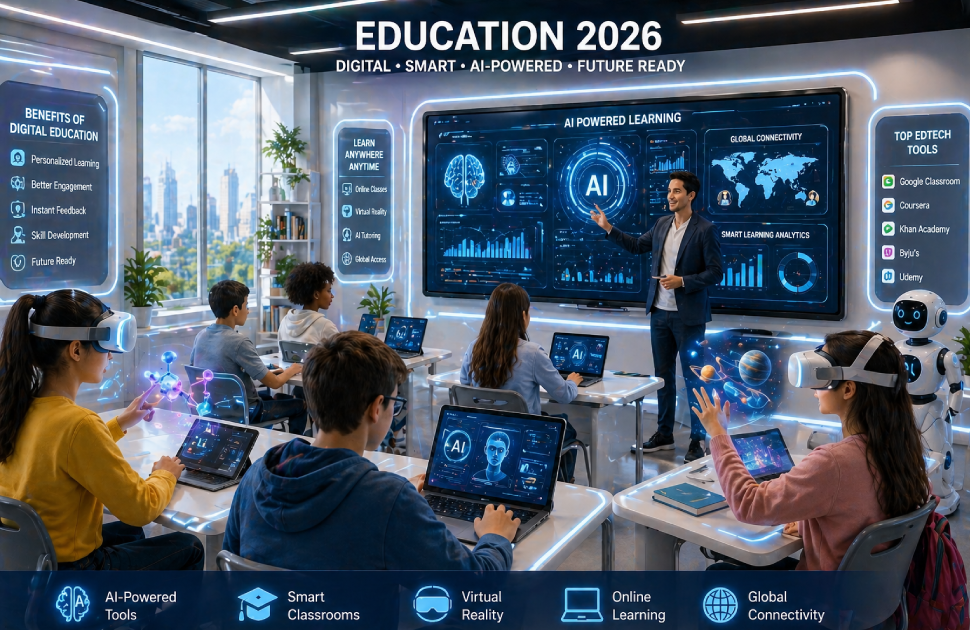
- Smart classroom systems
- Video learning tools
- E-books and digital notes
Example:
A student preparing for exams does not depend only on coaching classes. Instead, they:
- Watch online lectures
- Use apps for practice tests
- Ask AI tools for doubt solving
This makes learning faster and more flexible.
2. AI is Changing the Way Students Learn
Artificial Intelligence is one of the biggest reasons education is improving in 2026.
AI acts like a personal tutor for students.
Example:
A student struggling in physics can use an AI learning tool that:
- Explains concepts in simple language
- Shows diagrams and animations
- Gives step-by-step solutions
- Suggests revision plans
This type of learning was not possible a few years ago.
Related reading:
Future of Education in 2026: Impact of AI and Digital Learning on Students
3. Digital Tools Make Learning More Interactive
Learning is no longer boring or text-based only.
Example:
Instead of reading about planets, students now:
- Explore the solar system in VR
- Watch interactive 3D videos
- Take quizzes after each lesson
Result:
- Better understanding
- Higher interest in studies
- Strong memory retention
Digital tools make education more engaging.
4. Smart Classrooms Are Becoming Standard
Many schools in 2026 are using smart classroom technology.
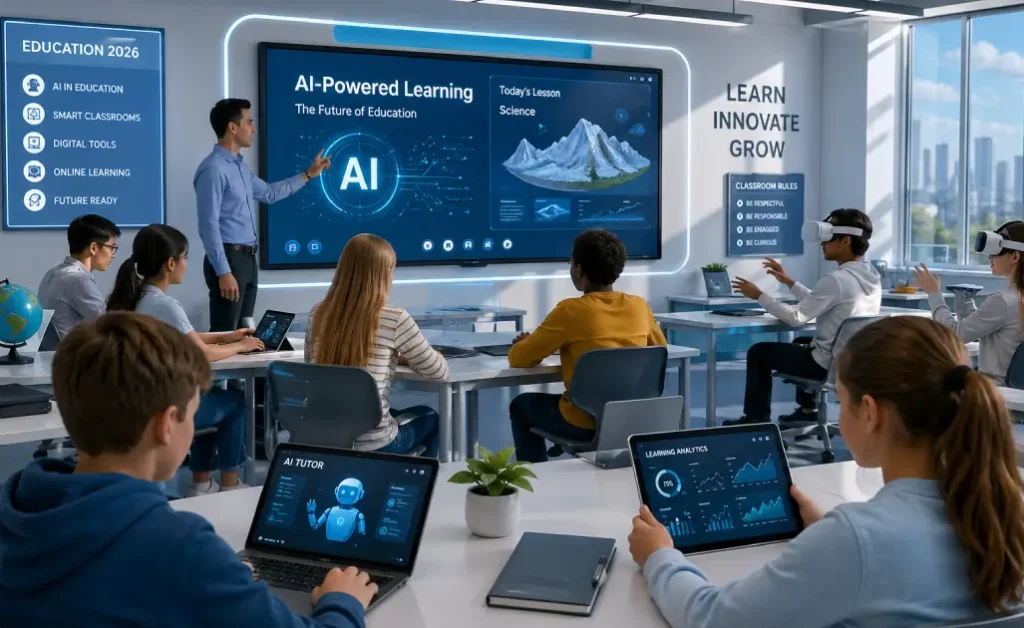
Example of smart classroom:
- Digital boards instead of chalkboards
- Video-based explanations
- Tablets for assignments
- Online attendance system
This makes teaching faster and more effective.
Related blog:
Smart Classrooms to AI Learning in 2026
5. Online Learning is Expanding Education Access
Education is now available beyond school walls.

Example:
A student in a remote area can:
- Join live classes from top teachers
- Watch recorded lectures anytime
- Practice online tests
- Learn global courses
This is possible because of online education platforms in 2026.
6. Students Are Learning Skills, Not Just Theory
Education is now focused on real-world skills.
Example:
Instead of only reading marketing theory, students now:
- Run digital campaigns
- Learn SEO and content creation
- Work on live projects
- Build portfolios
This prepares students for real jobs.
7. Teachers Are Using Technology as Support
Technology is not replacing teachers—it is helping them.
Example:
Teachers now:
- Use AI tools to check homework
- Create digital lessons faster
- Track student performance easily
This allows teachers to focus more on explaining concepts clearly.
8. Real-Life Example of Learning in 2026
Let’s take a simple example:
A student named Aarav studies in 2026.
His routine:
- Attends hybrid classes (online + offline)
- Uses AI apps for revision
- Watches VR science experiments
- Submits assignments online
- Joins group discussions on video calls
This combination of AI + digital tools + classroom learning is the new normal.
9. Challenges of Digital Learning in 2026
Even though technology is helpful, there are some challenges:
1. Distraction
Social media and games can reduce focus.
2. Screen Time Issues
Too much screen time can affect health.
3. Lack of Social Interaction
Students may miss real classroom communication.
4. Digital Divide
Not all students have equal access to devices or the internet.
10. Future of Education Beyond 2026
Education will become even more advanced in the coming years.
We may see:
- Fully AI-powered schools
- Global virtual classrooms
- Real-time language translation in lectures
- Fully personalized learning systems
Related blog:
How Digital Technology is Changing Education in 2026
Conclusion
Education in 2026 is becoming smarter, faster, and more personalized with the help of digital tools and AI. Students now have access to better learning methods than ever before.
However, balance is important. Technology should support learning, not replace discipline and focus.
The future of education is clear:
AI + Digital Tools + Human Teaching = Smarter Learning System
Students who adapt to this system will have better opportunities in the future.
FAQs – Education: AI and Digital Tools in Student Learning
How are digital tools changing education in 2026?
In 2026, digital tools in education like online platforms, smart classrooms, and learning apps are making study more interactive, flexible, and accessible for students anywhere in the world.
What is the role of AI in education in 2026?
AI in education 2026 helps students learn faster by acting as a personal tutor. It explains topics, solves problems, tracks progress, and creates personalized learning plans for each student.
Are smart classrooms better than traditional classrooms?
Yes, smart classrooms in 2026 improve learning by using digital boards, videos, and interactive lessons. They make education more engaging compared to traditional chalk-and-talk teaching methods.
How do online learning platforms help students?
Online learning platforms in 2026 allow students to attend classes anytime, learn from global teachers, practice tests online, and study at their own pace without location limits.
What are the challenges of digital learning for students?
The main challenges of digital learning in education 2026 include distractions from social media, health issues due to screen time, lack of physical interaction, and unequal access to technology.