Introduction
Staying safe online in 2026 is more important than ever. As technology grows, cyber threats are becoming smarter and more dangerous. From hacking to scams, anyone can become a target.
In this complete guide, you will learn how to stay safe online in 2026 using simple and practical tips. These methods will help you protect your personal data, secure your accounts, and use the internet safely every day.
If you want to understand the basics first, read our complete guide on Cybersecurity: Definition, Types, Threats, Trends, and Best Practices before continuing.
Why This Matters Right Now
In 2026, being online is not just normal—it is constant. You check messages, make payments, use apps, and share your life every day.
But here is the truth most people ignore:
Online threats are growing faster than people’s awareness.
Hackers are no longer just targeting big companies. They are targeting you—your phone, your email, your social media, and even your bank account.
If you think “this won’t happen to me,” that is exactly what makes people easy targets.
Long passwords require significantly more time and effort for hackers to crack, making them much harder to break. For more security tips, read our guide on Free VPN Safe Browsing.
The Biggest Online Threats in 2026
Cybercrime has changed. It is no longer obvious or easy to detect.
Here are the biggest dangers you need to know:
- AI-generated scam messages that look real
- Fake voices and videos (deepfakes)
- Password hacking using smart tools
- Social media identity theft
- Fake apps and websites
These threats are designed to trick normal users, not experts.
How to Stay Safe Online in 2026 (Simple but Powerful Tips)
You do not need advanced technical skills. You just need to follow smart habits consistently.
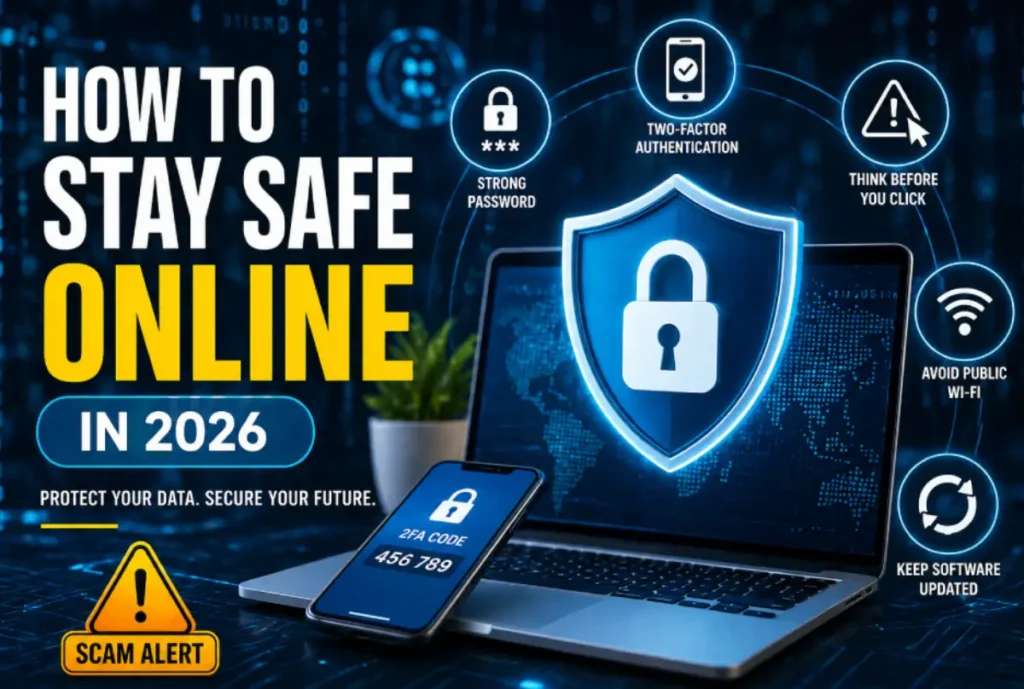
1. Stop Using Weak Passwords
This is still the #1 mistake people make.
If your password is simple, hackers can break it in seconds.
Do this instead:
- Use long passwords (12+ characters)
- Mix letters, numbers, and symbols
- Never reuse passwords
A strong password is your first protection layer.
2. Turn On Two-Factor Authentication Immediately
If you are not using 2FA, your accounts are at risk.
Even if someone steals your password, they still cannot log in.
This one step can block most hacking attempts.
3. Think Before You Click Anything
Most cyber attacks start with a simple click.
You may receive:
- Fake emails
- Suspicious WhatsApp messages
- Links that look real
Always check:
- Who sent it
- Whether the link is real
- If the message feels urgent or suspicious
If something feels off, do not click.

4. Public Wi-Fi Is Not Safe
Free Wi-Fi may seem useful, but it can expose your data.
Avoid logging into:
- Bank accounts
- Payment apps
If you must use it, use a VPN.
5. You Are Sharing Too Much on Social Media
Many people do not realize how much they expose online.
Posting things like:
- Your location
- Personal details
- Daily routine
can make you an easy target.
Stay safe:
- Keep your account private
- Share less personal information
- Accept requests carefully

6. Online Scams Are Smarter Than Ever
Scams in 2026 are not obvious. They look real and professional.
You might see:
- Job offers that look genuine
- Investment opportunities
- Messages from “customer support”
Remember:
If it feels too good to be true, it probably is.
7. Keep Everything Updated
Updates are not just for features—they fix security gaps.
Always update:
- Your phone
- Apps
- Laptop
Outdated systems are easy targets.
8. AI Is Changing Cybercrime
This is the biggest shift in 2026.
Hackers now use AI to:
- Create fake voices
- Generate real-looking messages
- Personalize scams
This makes attacks harder to detect.
Your defense:
- Verify before trusting
- Do not act quickly under pressure
- Double-check everything

9. Your Data Is More Valuable Than You Think
Your personal data is like digital money.
If stolen, it can be used for:
- Identity theft
- Fraud
- Unauthorized access
Protect it by:
- Not sharing sensitive details
- Using secure platforms
- Monitoring your accounts regularly
10. Simple Habits That Make a Big Difference
You do not need complicated tools.
Just follow these habits:
- Log out from shared devices
- Do not save passwords on public systems
- Backup your important data
- Check account activity regularly
To understand how technology is evolving, you can also explore:
- Best AI Tools for Beginners in 2026
- AI vs Human Intelligence
- Top Digital Trends 2026
- How to Protect Your Phone from Hackers (Complete Guide).
Trusted Resource
For more cybersecurity awareness, you can refer to official global security guidelines like cybersecurity awareness programs.
Trend Post: Will AI Replace Human Jobs? | AI Jobs Future
Also, read this post:
Best Cyber Security AI Tools: AI-Powered Security Solutions Guide
What Is Digital Marketing? Benefits, Types, and How It Works
How AI Chatbots Work: A Beginner’s Guide to AI Conversations
Conclusion
Staying safe online in 2026 is not about fear—it is about awareness.
The internet is powerful, but it also comes with risks. The good news is that most threats can be avoided with simple steps.
Now that you understand how to stay safe online in 2026, you are already ahead of many people.
Stay alert, think smart, and protect your digital life every day.
FAQs (Frequently Asked Questions)
How to stay safe online in 2026?
To stay safe online in 2026, you need to follow essential online safety tips and adopt strong digital habits. Start by using strong passwords with a mix of characters and enable two-factor authentication (2FA) on all important accounts. These basic steps can prevent most cyber attacks in 2026 and protect your personal data from hackers. Also, avoid clicking on unknown links or downloading files from untrusted sources, as many online scams and phishing attacks begin with a simple click.
Another important step is keeping your devices and apps updated, as updates fix security vulnerabilities. Always use trusted networks and avoid sharing sensitive information online. With rising AI cyber threats and data privacy risks, staying alert and thinking before you act is the best defense. By following these simple cybersecurity tips 2026, you can significantly reduce the risk of being targeted online.
What are the biggest cyber threats in 2026?
The biggest cyber threats in 2026 are more advanced and harder to detect due to artificial intelligence. One of the major risks is AI-generated phishing scams, where fake emails and messages look completely real. Another growing threat is deepfake technology, which can create fake voices and videos to trick users. These advanced methods make online fraud and identity theft more dangerous than ever.
Additionally, users face risks from fake apps, malicious websites, and data breaches that can steal sensitive information. Hackers also use automated tools for password hacking and account takeovers. As internet security threats continue to evolve, awareness is key. Understanding these dangers helps you stay prepared and apply the right online security practices to protect your digital identity.
What are the biggest cyber threats in 2026?
Public WiFi is convenient but not secure, making it a major risk for online privacy and data protection. When using public networks in cafes or airports, hackers can intercept your data through methods like man-in-the-middle attacks. This means your passwords, emails, and banking details can be exposed, especially if the network is not encrypted.
To stay safe, avoid logging into sensitive accounts while using public WiFi and consider using a VPN for secure browsing. A VPN encrypts your connection and protects your data from cybercriminals. As part of your internet safety tips 2026, always verify networks before connecting and disable auto-connect features. For better protection, use mobile data when accessing important information.