Introduction
Ethical hacking is one of the fastest-growing fields in cybersecurity. As cybercrime continues to rise worldwide, companies, governments, and organisations need skilled professionals who can identify security weaknesses before cybercriminals exploit them.
Ethical hacking is the practice of testing computer systems, networks, applications, and digital infrastructure using hacking techniques — but with proper legal permission and authorization. Ethical hackers help organisations improve their security systems, prevent cyberattacks, and protect sensitive information from data breaches.
In this complete beginner’s guide to ethical hacking, you’ll learn what ethical hacking is, how ethical hackers work, different types of hackers, ethical hacking tools, career opportunities, certifications, required skills, salary expectations, and a step-by-step roadmap to becoming an ethical hacker.
What Is Ethical Hacking in Cyber Security?
Ethical hacking in cybersecurity refers to legally testing computer systems, applications, or networks to identify vulnerabilities and security flaws before malicious hackers can exploit them.
Ethical hackers use many of the same tools and techniques as cybercriminals, but they work with permission from organisations to strengthen digital security systems instead of damaging them.
The main purpose of ethical hacking is to:
- Improve cybersecurity
- Detect vulnerabilities early
- Prevent data breaches
- Protect sensitive information
- Strengthen network security
- Reduce cyber risks
Ethical hackers are commonly known as white-hat hackers because they use their technical knowledge for defensive and legal purposes.
Ethical Hacking Explained for Beginners
To understand ethical hacking basics, imagine a company hiring a cybersecurity expert to safely test its own systems. The ethical hacker attempts to find weaknesses before real attackers discover them.
After completing the security assessment, the ethical hacker prepares a detailed report explaining:
- Vulnerabilities found
- Security risks
- Possible attack methods
- Recommended security fixes
- Risk severity levels
This process helps organisations improve their cybersecurity infrastructure and avoid future attacks.
If you are completely new to cybersecurity, you should also learn about modern online threats and digital safety practices. Our guide on How to Stay Safe in Online explains common cyber risks most internet users ignore every day.
Why Ethical Hacking Is Important
Cybercrime is growing rapidly across the world. Businesses store banking data, passwords, personal information, customer records, and confidential files online, making them major targets for hackers.
Ethical hacking helps organizations:
- Prevent cyberattacks
- Detect vulnerabilities early
- Improve cyber defence systems
- Protect customer trust
- Reduce financial losses
- Strengthen network security
- Secure sensitive business data
According to cybersecurity industry reports, global cybercrime damages may reach trillions of dollars in the coming years. This increasing threat makes ethical hacking more important than ever before.
Modern cyberattacks are becoming more advanced with the help of artificial intelligence. To understand how AI is changing cybersecurity, you can read What Is AI Security? A Complete Guide to AI Threats, Risks, and Protection.
White-Hat Hacker vs Black-Hat Hacker
There is a major difference between ethical hackers and malicious hackers.
| Ethical Hackers (White-Hat) | Black-Hat Hackers |
| Work legally with permission | Hack systems illegally |
| Improve security systems | Steal data and money |
| Protect organisations | Damage networks |
| Find vulnerabilities responsibly | Exploit vulnerabilities |
| Help prevent cyberattacks | Create cyber threats |
Ethical hackers focus on strengthening cybersecurity systems, while black-hat hackers attempt to exploit weaknesses for personal gain.
Types of Hackers
1. White-Hat Hackers
White-hat hackers are ethical hackers who legally test systems and help organisations improve cybersecurity.
2. Black-Hat Hackers
Black-hat hackers illegally access systems to steal information, spread malware, damage networks, or conduct cybercrime activities.
3. Grey-Hat Hackers
Grey-hat hackers operate between ethical and illegal hacking. They may access systems without permission but often report vulnerabilities instead of causing harm.
4. Red-Hat Hackers
Red-hat hackers aggressively target cybercriminals and malicious hackers to stop attacks and disrupt illegal activities.
5. Blue-Hat Hackers
Blue-hat hackers focus on improving security systems, conducting vulnerability testing, and identifying risks before products launch publicly.
How Ethical Hackers Work
Many beginners wonder how ethical hackers actually work in real-world cybersecurity environments.
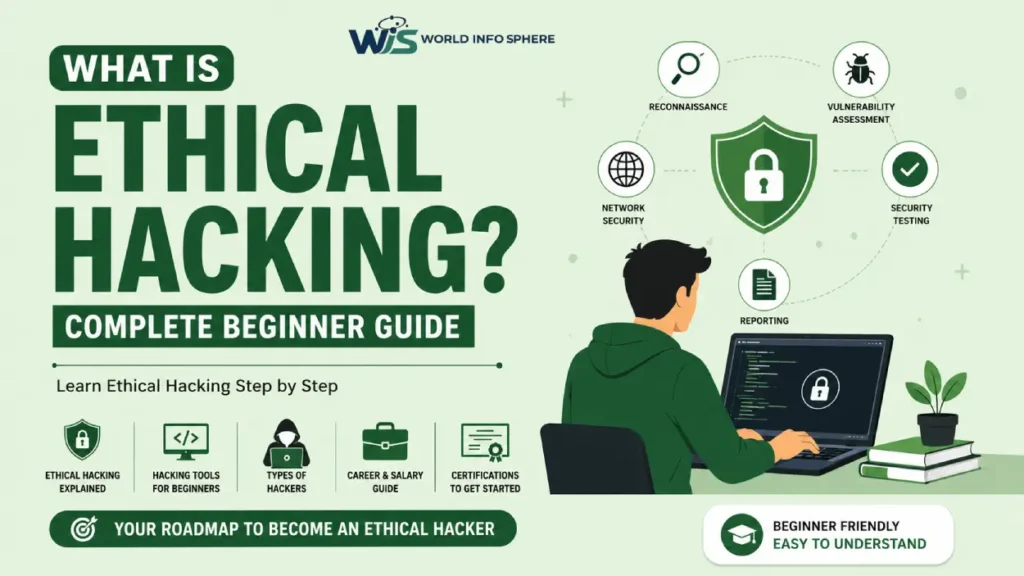
Ethical hackers usually follow a structured security testing process:
Reconnaissance
Gathering information about the target system, network, or application.
Scanning
Using ethical hacking tools to identify vulnerabilities and open ports.
Gaining Access
Testing whether security flaws can actually be exploited.
Maintaining Access
Checking how long attackers could remain inside systems undetected.
Reporting
Creating detailed security reports and recommending improvements.
This structured approach helps organisations strengthen their cybersecurity infrastructure effectively.
Types of Ethical Hacking
Ethical hacking includes multiple cybersecurity areas:
- Web application hacking
- Network hacking
- Wireless network testing
- Cloud security testing
- Mobile application hacking
- Social engineering testing
- System hacking
- Database security testing
Each cybersecurity field requires different technical skills, tools, and knowledge.
Ethical Hacking Tools for Beginners
Beginners learning ethical hacking commonly use the following cybersecurity tools:
- Kali Linux
- Nmap
- Wireshark
- Metasploit
- Burp Suite
- Aircrack-ng
- John the Ripper
- Nikto
These ethical hacking tools help professionals analyze networks, scan systems, identify vulnerabilities, and test cybersecurity protections.
Many ethical hackers also use VPN services while learning cybersecurity to improve privacy and network protection. You can read Best Free VPNs for Safe Browsing in 2026 to understand how VPNs improve online privacy and security.
Ethical Hacking vs Illegal Hacking
Many people confuse ethical hacking with illegal hacking, but there is a major difference.
| Ethical Hacking | Illegal Hacking |
| Legal activity | Illegal activity |
| Requires permission | No permission |
| Improves security | Damages systems |
| Helps organisations | Harms organisations |
Ethical hacking focuses on cybersecurity protection, while illegal hacking focuses on exploitation and cybercrime.
Is Ethical Hacking Legal?
Yes, ethical hacking is legal when performed with proper written permission from the organisation.
Without authorization, accessing or testing any system becomes illegal, even if no damage occurs.
Ethical hackers must follow:
- Cybersecurity laws
- Company policies
- Responsible disclosure practices
- Legal authorization procedures
Always practice ethical hacking only in legal environments or cybersecurity labs.
Benefits of Ethical Hacking
Ethical hacking offers many important cybersecurity advantages:
- Prevents cyberattacks
- Protects sensitive information
- Strengthens network security
- Improves cyber defence systems
- Builds customer trust
- Identifies vulnerabilities early
- Reduces business risks
- Improves overall cybersecurity posture
Today, almost every major company relies on cybersecurity professionals and ethical hackers to secure digital systems.
Ethical Hacking Career Guide
The demand for ethical hackers is growing rapidly worldwide. Businesses, governments, banks, and technology companies need cybersecurity experts to protect digital infrastructure.
Popular ethical hacking job roles include:
- Penetration Tester
- Security Analyst
- Vulnerability Assessor
- Cyber Security Consultant
- Information Security Analyst
- Security Engineer
- Certified Ethical Hacker
Ethical hacking offers excellent long-term career growth opportunities for technology enthusiasts.
Ethical Hacker Salary in India
Ethical hacker salaries depend on:
- Technical skills
- Certifications
- Experience level
- Company size
- Security expertise
| Experience Level | Average Salary |
| Beginner | ₹3 LPA – ₹6 LPA |
| Mid-Level | ₹7 LPA – ₹15 LPA |
| Experienced | ₹20 LPA+ |
Certified cybersecurity professionals with advanced penetration testing skills can earn even higher salaries.
Best Ethical Hacking Skills to Learn
To become a successful ethical hacker, you need strong technical knowledge and cybersecurity skills.
Important ethical hacking skills include:
- Networking fundamentals
- Linux operating systems
- Programming languages
- Web application security
- Database management
- Cybersecurity concepts
- Problem-solving abilities
- Vulnerability assessment
- Penetration testing
- Digital forensics basics
Strong password security knowledge is also essential because weak passwords remain one of the biggest cybersecurity risks worldwide. Beginners should also read Password Safety Tips for Beginners: How to Keep Your Accounts Secure Online” to understand how hackers exploit weak credentials.
Common Cybersecurity Threats Ethical Hackers Study
Ethical hackers study different cyber threats to understand how attackers operate.
Some common cybersecurity threats include:
- Malware attacks
- Ransomware
- Phishing emails
- Password attacks
- WiFi hacking
- Social engineering
- Spyware
- Data breaches
Phishing remains one of the most dangerous online threats today. If you want to understand how fake emails trick users into sharing sensitive information, read What is Phishing Email? How to Identify It and Easy Ways to Protect Yourself.
Importance of Mobile and WiFi Security
Cybersecurity is not limited to computers only. Smartphones and home internet networks are also common hacking targets.
Hackers often attack:
- Android devices
- iPhones
- Public WiFi networks
- Home routers
- IoT devices
To improve mobile security, check our guide on How to Protect Your Phone from Hackers (Complete Guide) where we explain practical ways to secure smartphones from hackers and spyware.
Your internet router is equally important because weak WiFi passwords and outdated settings can expose your entire network. You can also learn router protection techniques in How to Secure Your WiFi Router from Hackers.
How to Become an Ethical Hacker
If you want to learn ethical hacking step by step, follow this beginner-friendly roadmap.
Step 1: Learn Computer Basics
Understand operating systems, hardware, file systems, and internet basics.
Step 2: Learn Networking
Study IP addresses, DNS, protocols, routers, switches, and firewalls.
Step 3: Learn Linux
Linux is widely used in cybersecurity and ethical hacking.
Step 4: Learn Programming
Programming languages like Python, JavaScript, and Bash scripting are extremely useful.
Step 5: Understand Cyber Security Basics
Learn about vulnerabilities, malware, phishing, encryption, and security testing.
Step 6: Practice Ethical Hacking Tools
Use virtual labs and legal practice environments to improve your skills safely.
Step 7: Earn Certifications
Popular cybersecurity certifications include:
- CEH (Certified Ethical Hacker)
- CompTIA Security+
- CISSP
- CISA
Step 8: Build Real-World Experience
Participate in capture-the-flag challenges, cybersecurity labs, and legal penetration testing projects.
Consistency and continuous learning are extremely important in cybersecurity careers.
Ethical Hacking Roadmap for Beginners
Here is a simple ethical hacking roadmap:
- Computer Basics
- Networking
- Linux
- Programming
- Cyber Security Fundamentals
- Ethical Hacking Tools
- Web Security
- Penetration Testing
- Certifications
- Real-World Practice
Cybersecurity is constantly evolving, so continuous learning is essential for long-term success.
Also read this post:
What is Affiliate Marketing? The Step-by-Step Guide to Making Money
What is Google Gemini AI? Google’s most powerful AI technology
How to earn money using AI Tools? Amazing Tips 2026
Final Thoughts
Ethical hacking plays a critical role in modern cybersecurity. As cyber threats continue to evolve, ethical hackers help organizations protect sensitive information, prevent data breaches, and strengthen digital security systems.
For beginners, ethical hacking offers exciting career opportunities, excellent salary potential, and continuous learning. By developing the right technical skills, learning ethical hacking tools, and gaining certifications, you can build a successful future in cybersecurity.
However, ethical hacking is not only about learning hacking tools. You also need strong knowledge of password security, phishing attacks, mobile protection, WiFi security, AI-based cyber threats, and online privacy.
To improve your cybersecurity knowledge further, you should also explore:
- “How to Stay Safe Online in 2026 (Most People Ignore These Risks)”
- “What Is AI Security? A Complete Guide to AI Threats, Risks, and Protection”
- “What is a phishing email? How to Identify It and Easy Ways to Protect Yourself”
- “How to Secure Your WiFi Router from Hackers”
- “How to Protect Your Phone from Hackers (Complete Guide)”
- “Best Free VPNs for Safe Browsing in 2026”
- “Password Safety Tips for Beginners: How to Keep Your Accounts Secure Online”
- “What Is a White Hat Hacker? Complete Guide for Beginners“
Ethical hacking is about protecting the digital world responsibly and legally. If you are passionate about technology, cybersecurity, and problem-solving, ethical hacking can become one of the best career choices in today’s digital era.
FAQs About Ethical Hacking
What is ethical hacking?
Ethical hacking is the legal process of testing systems and networks to identify security vulnerabilities.
Which programming language is best for ethical hacking?
Python is one of the best programming languages for ethical hacking beginners.
Is ethical hacking a good career?
Yes, ethical hacking is a high-demand cybersecurity career with excellent growth opportunities.
Can beginners learn ethical hacking?
Yes, beginners can learn ethical hacking step by step with proper guidance and practice.
What are the best ethical hacking certifications?
Popular certifications include CEH, CISSP, Security+, and CISA.
Is ethical hacking difficult?
Ethical hacking requires patience, technical learning, and continuous practice, but beginners can learn gradually.
Which operating system do ethical hackers use?
Many ethical hackers use Kali Linux for penetration testing and security assessments.
Important Note:
This article is shared only for educational purposes, cybersecurity awareness, and ethical learning. We do not support illegal hacking, unauthorized access, or any cybercrime activities. Always use cybersecurity knowledge responsibly and legally.