Introduction
Artificial intelligence is becoming part of everyday life faster than most people expected.
People use AI while shopping online, scrolling social media, talking to chatbots, using banking apps, or even getting movie recommendations on streaming platforms. Businesses are also depending heavily on AI to automate work, improve customer service, analyze data, and save time.
But here’s the thing…
The more powerful AI becomes, the bigger the security risks become too.
Most people think about hackers targeting websites or stealing passwords. Very few think about hackers manipulating AI systems directly. And honestly, that’s where the real problem starts. AI systems can now influence business decisions, financial transactions, healthcare analysis, and even public safety. If attackers manage to exploit these systems, the consequences can become serious very quickly.
Imagine a hospital AI system giving incorrect medical suggestions because someone manipulated its training data. Or a fake AI-generated voice convincing an employee to transfer company money to scammers. These situations sound dramatic, but they are already happening in real life. That’s exactly why AI security has become one of the most important discussions in technology today.
That’s exactly why topics like AI security and Cybersecurity are becoming some of the most important discussions in technology today. As businesses rely more on smart systems, protecting digital infrastructure, sensitive data, and AI-powered applications is no longer optional. It has become a necessity.
This guide explains what AI security really means, why businesses care so much about it, common AI threats, real-world examples, and practical ways companies protect their AI systems from attacks.
What Is AI Security?
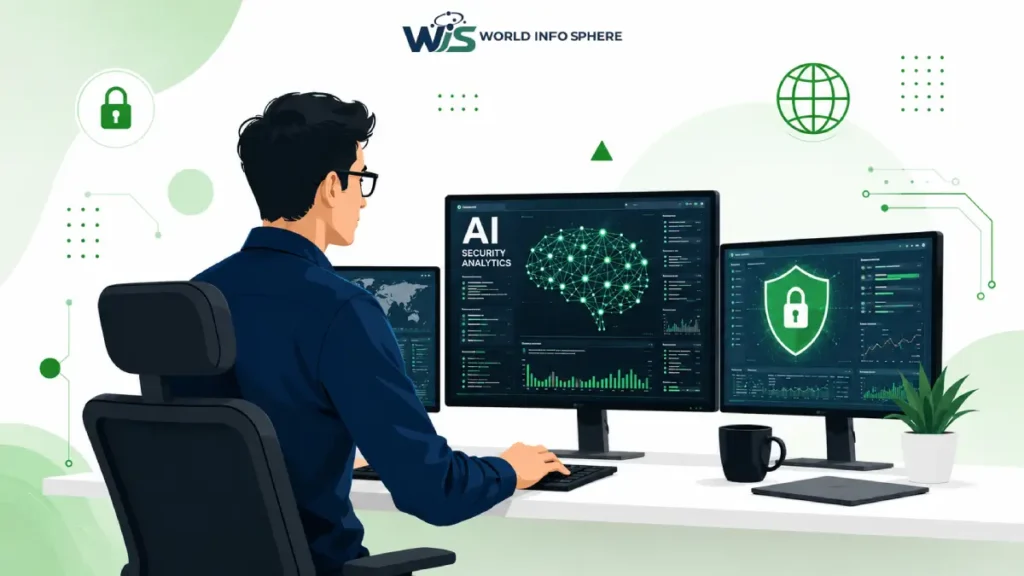
AI security refers to the process of protecting artificial intelligence systems, machine learning models, training data, and AI-powered applications from cyber threats, manipulation, misuse, and unauthorized access. In simple words, AI security makes sure AI systems work safely and reliably without being controlled or damaged by attackers. Most people assume AI systems are naturally intelligent enough to protect themselves. But in real life, AI systems are still software systems built by humans. They depend heavily on data, algorithms, cloud servers, APIs, and user inputs. If even one part becomes vulnerable, attackers can exploit the entire system.
For example, imagine an AI-powered fraud detection system used by a bank. The AI learns patterns from thousands of past transactions. Now imagine hackers secretly feeding fake transaction patterns into the system during training. Over time, the AI may stop detecting fraudulent payments correctly. That creates financial damage, customer complaints, and trust issues almost immediately.
And honestly, this is why businesses are becoming nervous about AI security. AI systems don’t just store information anymore. They make decisions. If attackers influence those decisions, the damage becomes much harder to control.
Long passwords require significantly more time and effort for hackers to crack, making them much harder to break. For more security tips, read our guide on Free VPN Safe Browsing.
Why AI Security Matters More Than Ever
Businesses are adopting AI at an incredible speed.
Online stores use AI chatbots for customer support. Hospitals use AI tools to assist doctors. Banks use AI to monitor suspicious transactions. Marketing teams use AI for content creation and customer targeting. The problem is that many organizations adopted AI tools faster than they built security systems around them.
That’s risky.
Would you trust a navigation app that constantly gave dangerous directions? Probably not. The same thing happens when AI systems become unreliable or insecure. Users lose trust quickly.
Most people don’t realize this, but AI systems often process highly sensitive information such as:
- Customer data
- Financial records
- Business documents
- Medical reports
- Employee information
If hackers gain access to this data through vulnerable AI systems, companies can face massive legal and financial problems. A real example happened when employees from multiple companies pasted confidential business information into public AI chatbots while trying to save time at work. They didn’t realize the data could be stored or processed externally. And honestly, this happens a lot because people focus more on convenience than security.
Another reason AI security matters is because cybercriminals now use AI too. Hackers use AI-powered tools to create phishing emails, fake videos, voice cloning scams, and automated attacks faster than before. So businesses are not just protecting AI anymore. They are fighting AI-powered threats too.
How AI Systems Become Vulnerable
AI systems may look advanced from the outside, but they still have several weak points attackers can exploit.
One of the biggest vulnerabilities is training data. AI models learn from massive datasets. If attackers manipulate that data, the AI can start learning harmful behavior without developers noticing immediately.
This is called data poisoning.
For example, imagine a company building an AI system to filter spam emails. If attackers secretly insert manipulated examples into the training dataset, the AI may start treating dangerous phishing emails as safe messages.
That’s where the real danger begins.
Another common weakness is insecure APIs. Many AI systems connect with websites, mobile apps, and cloud platforms using APIs. If those APIs are poorly protected, attackers may gain unauthorized access to AI systems or sensitive data.
Human mistakes also create huge security risks.
A small business owner might upload customer spreadsheets into an AI tool to generate reports quickly without checking privacy settings properly. If the platform stores or exposes that information, customer data could leak unexpectedly. And honestly, many AI security problems happen because people simply don’t understand the risks yet.
Weak passwords, poor permissions, outdated systems, and careless data sharing still cause a huge number of security incidents.
Common Types of AI Security Threats
AI systems face several unique threats that traditional software systems may never encounter.
Adversarial Attacks
In adversarial attacks, hackers slightly modify input data to confuse AI systems. Researchers once demonstrated how tiny sticker changes on stop signs could trick self-driving car AI systems into misreading them. Humans still saw a normal stop sign, but the AI system interpreted something completely different.
That becomes dangerous when AI systems control vehicles, medical tools, or security systems.
Data Poisoning
Data poisoning happens when attackers intentionally corrupt AI training data. The goal is simple: manipulate how the AI behaves later.
For example, attackers could poison a recommendation algorithm so it promotes fake products or hides legitimate content.
Prompt Injection Attacks
- This type of attack has become very common with AI chatbots and generative AI tools.
- Attackers craft specific prompts designed to bypass restrictions, reveal hidden instructions, or expose confidential information.
- Many companies using AI customer service tools are now actively testing systems against these attacks.
Deepfake Scams
AI-generated fake voices and videos are becoming frighteningly realistic.
A real case involved scammers using AI voice cloning technology to imitate a CEO during a phone call. An employee believed the voice was genuine and transferred company funds to criminals.
That single incident cost the company a massive amount of money. And honestly, deepfake technology is improving so quickly that many people struggle to identify fake content anymore.
Real-World AI Security Examples
A small e-commerce store recently started using an AI chatbot to handle customer support. The owner wanted faster replies and lower support costs, which sounded like a smart move at first.
But during setup, an employee uploaded internal spreadsheets containing customer order details and supplier pricing information into the chatbot system for testing purposes.
The problem?
Security permissions were never configured correctly.
Sensitive information later became accessible internally in ways the business owner never expected. Customers started asking questions after private order details appeared in conversations accidentally.
- The business spent months rebuilding customer trust.
- Another example comes from healthcare.
A hospital introduced an AI-powered patient analysis tool to help doctors review medical records faster. The system worked well initially, but weak access controls allowed unauthorized staff members to view sensitive patient information.
- The AI system itself wasn’t malicious.
- Poor security practices created the issue.
These examples show something important. AI systems are not automatically dangerous, but careless implementation can create very real risks.
AI Security vs Traditional Cybersecurity
Many people assume AI security and cybersecurity are exactly the same thing.
They’re connected, but they are not identical.
Traditional cybersecurity focuses on protecting devices, servers, databases, networks, and applications from attacks. AI security specifically focuses on protecting machine learning systems, training data, algorithms, and AI decision-making processes.
For example, antivirus software may protect a computer from malware, but it cannot detect whether an AI model has learned manipulated patterns from poisoned training data.
Similarly, firewalls protect networks, but they cannot prevent prompt injection attacks targeting AI chatbots.
That’s why businesses now need AI-specific security strategies instead of relying only on traditional cybersecurity methods.
And honestly, many companies are still trying to figure out this transition while actively dealing with modern threats at the same time.
Major Risks Businesses Face
One of the biggest risks businesses face is financial loss. A compromised AI system can lead to fraud, lawsuits, operational downtime, or regulatory penalties. For large companies, even a short security incident can cost millions.
Reputation damage is another major issue.
People stop trusting businesses very quickly after data leaks or security failures. If customers feel unsafe sharing information with your company, rebuilding that trust becomes extremely difficult.
There’s also the risk of biased or manipulated AI decisions.
Imagine an AI hiring tool suddenly rejecting qualified candidates unfairly because attackers manipulated parts of the training dataset. That could create legal trouble and public backlash very quickly. Most people focus only on hackers stealing data.
But sometimes the bigger problem is AI systems quietly making harmful decisions without anyone noticing immediately.
How Companies Protect AI Systems
Businesses are now investing heavily in AI security because the risks are becoming too serious to ignore.
One of the first steps companies take is improving data security. AI systems rely heavily on quality data, so businesses use encryption, access controls, and monitoring systems to protect datasets from tampering.
Many organizations also perform regular AI testing.
Ethical hackers, often called red teams, intentionally try to attack AI systems to find vulnerabilities before criminals do. This helps companies fix weak points early.
Employee training is becoming important too.
A large percentage of AI-related security problems happen because employees unknowingly expose sensitive information while using AI tools. Companies now train staff on safe AI usage, prompt security, and data privacy practices.
And honestly, simple security habits still make a huge difference. Strong passwords, limited permissions, and proper monitoring can prevent many common problems before they grow into disasters.
Best Practices for AI Security
Businesses using AI should never treat security as an afterthought.
Strong AI security starts with controlled access. Not every employee should have full permission to access sensitive AI systems or datasets.
Monitoring AI behavior is also critical. Unexpected responses, unusual outputs, or sudden accuracy drops may signal attacks or manipulation attempts.
Companies should also avoid uploading confidential information into public AI tools unless proper protections exist.
In real life, many people use AI tools casually without thinking about privacy risks. That convenience mindset creates problems very quickly.
Regular updates matter too. Outdated AI systems often contain vulnerabilities attackers can exploit easily.
Most importantly, businesses should create clear AI governance policies so employees understand what is safe and unsafe when using AI systems.
Trending Now:
Cybersecurity: Definition, Types, Threats, Trends, and Best Practices
Will AI Replace Human Jobs? | AI Jobs Future
How to Protect Your Phone from Hackers (Complete Guide).
Best Cyber Security AI Tools: AI-Powered Security Solutions Guide
Conclusion
AI is becoming more powerful every year, and businesses are depending on it more than ever before. But smarter technology also creates smarter threats. That’s why AI security matters so much now. It’s not just about protecting software anymore. It’s about protecting decisions, customer trust, private data, and business operations. The companies taking AI security seriously today will likely avoid massive problems tomorrow. And honestly, users don’t just want advanced AI tools anymore. They want AI systems they can actually trust.
Why is AI security important?
AI systems often handle sensitive data and critical decisions. Weak security can lead to financial loss, privacy breaches, and dangerous outcomes.
What are common AI security threats?
Common threats include:
1. Data poisoning
2. Adversarial attacks
3. Deepfake scams
4. Prompt injection
5. Model theft
Can AI be hacked?
Yes. Attackers can manipulate AI systems, steal models, corrupt training data, or exploit vulnerabilities in connected systems.
Is AI security different from cybersecurity?
Yes. AI security focuses specifically on protecting machine learning systems and AI models, while cybersecurity covers broader digital infrastructure protection.
How can businesses improve AI security?
Businesses can improve AI security by:
1. Training employees
2. Protecting data
3. Monitoring AI outputs
4. Limiting system access
5.Updating security practices regularly
Take Action: Secure Your AI Systems Today
If your business is already using AI tools, now is the perfect time to review your security practices before problems appear later.
Start by checking:
- How your AI systems store data
- Who has access to sensitive information
- Whether employees understand AI privacy risks
- How protected your AI tools really are
Even small security improvements today can prevent major financial and reputational damage in the future.
Stay Updated About Cybersecurity
Awareness is the best defense.
Helpful resources: