Introduction
In today’s world, digital technology has become a big part of education. From primary school to university level, students are using technology in almost every step of learning. In 2026, education is no longer limited to books, classrooms, and chalkboards. Instead, it has become more interactive, digital, and flexible.
Digital technology includes tools like smartphones, laptops, online learning platforms, artificial intelligence (AI), virtual classrooms, and educational apps. These tools are changing the way students learn and teachers teach.
In this blog, we will explore the impact of digital technology on students and education, its benefits, challenges, and future possibilities. We will also use important SEO keywords like digital learning 2026, online education, AI in education, e-learning platforms, and smart classrooms to help improve search visibility.
What is Digital Technology in Education?
Digital technology in education means using electronic devices and online tools to support learning and teaching. It includes:
- Online learning platforms (like Coursera, Udemy, Google Classroom)
- Educational apps (Duolingo, Khan Academy)
- Artificial Intelligence (AI) tools for learning
- Smart boards and digital classrooms
- Video conferencing tools (Zoom, Microsoft Teams)
Today, education is not only happening inside schools but also at home through online education systems and e-learning platforms.
Positive Impact of Digital Technology on Students
1. Easy Access to Information
One of the biggest advantages of digital learning is easy access to information. Students can learn anything at any time using the internet.
For example:
- A student can watch YouTube tutorials for mathematics
- They can read e-books instead of carrying heavy books
- They can search educational content instantly on Google
This makes learning faster and more convenient.
2. Flexible Learning (Anytime, Anywhere)
With online education platforms, students are not restricted to classroom timing. They can study:
- At home
- While traveling
- At their own pace
This flexibility is very useful for students who are working or preparing for competitive exams.
3. Better Understanding with Visual Learning
Digital tools use videos, animations, and graphics to explain topics. This makes learning more interesting and easy to understand.
For example:
- Science experiments can be shown through videos
- History lessons can be explained with documentaries
- Math problems can be solved step-by-step using apps
Visual learning improves memory and understanding.
4. AI in Education Improves Learning Experience
Artificial Intelligence (AI) is playing a major role in modern education. AI-based tools help students learn better by:
- Giving personalized study plans
- Suggesting weak areas
- Providing instant answers
- Acting as virtual tutors
Example: AI chat tools and learning assistants can explain difficult topics in simple language.
5. Online Collaboration and Communication
Students can now connect with teachers and classmates through digital platforms.
Tools like:
- Zoom
- Google Meet
- Microsoft Teams
help students attend online classes and group discussions easily.
This improves teamwork and communication skills.
6. Saves Time and Cost
Digital education reduces the need for physical books and travel. Many online courses are also cheaper than traditional coaching.
Students can:
- Download free study materials
- Attend online classes from home
- Avoid travel expenses
This makes education more affordable.
7. Skill Development Opportunities
Digital technology helps students learn new skills like:
- Coding and programming
- Digital marketing
- Graphic design
- Communication skills
Platforms like Coursera and Udemy provide professional courses that help students build careers.
Negative Impact of Digital Technology on Education
Even though digital technology has many benefits, it also has some disadvantages.
1. Distraction from Studies
Social media apps like Instagram, YouTube, and games can distract students. Instead of studying, students may waste time online.
2. Health Problems
Too much screen time can cause:
- Eye strain
- Headaches
- Back pain
- Sleep problems
Students need to balance online and offline study time.
3. Lack of Physical Interaction
Online education reduces face-to-face communication. Students may feel isolated and less socially active.
4. Dependence on Technology
Students may become too dependent on digital tools. If the internet is not available, learning may get affected.
5. Digital Inequality
Not all students have access to smartphones, laptops, or high-speed internet. This creates a gap between rich and poor students in education.
Role of AI and Smart Classrooms in 2026
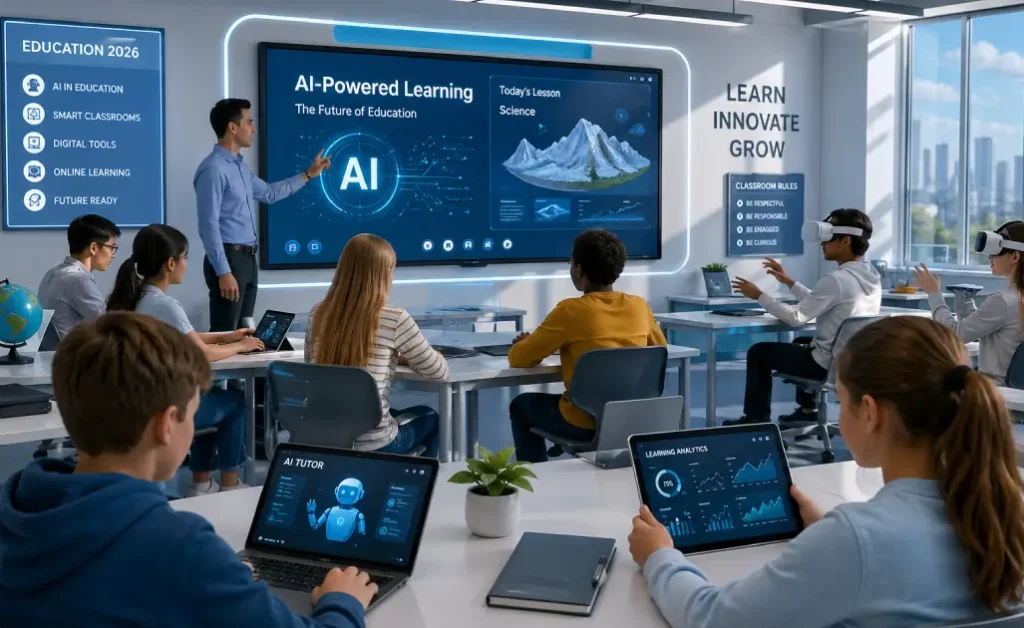
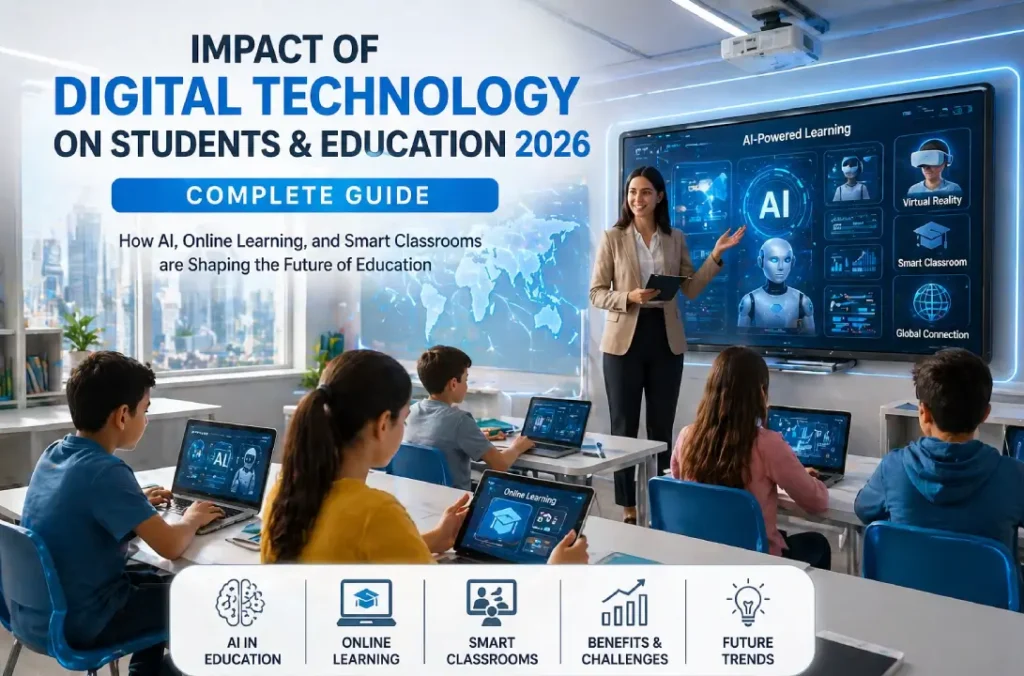
In 2026, education is becoming smarter with AI and smart classroom technology.
Smart Classrooms
Smart classrooms use:
- Digital boards
- Projectors
- Interactive learning tools
Teachers can explain topics using animations and videos.
AI-Based Learning
AI tools can:
- Check homework automatically
- Give instant feedback
- Personalize learning for each student
This makes education more efficient and modern.
E-learning platforms are one of the biggest trends in education today.
Popular platforms include:
- Google Classroom
- Coursera
- Udemy
- Khan Academy
These platforms allow students to learn professional courses and school subjects online from anywhere.
If you want to explore more tools, check our guide on Best AI Tools for Students in 2026.
To improve your learning skills, read how-to-learn-online-effectively.
You can also explore the future trends in education in our article Future of education technology.
Future of Digital Education
The future of education is fully digital and smart. In the coming years, we can expect:
- More AI-powered classrooms
- Virtual Reality (VR) learning experiences
- Personalized education systems
- Fully online degrees
Students will learn through immersive experiences instead of traditional methods.
Conclusion
Digital technology has completely changed the education system in 2026. It has made learning easier, faster, and more flexible. Students can now study from anywhere, learn new skills, and access unlimited knowledge online.
However, it also comes with challenges like distractions, health issues, and lack of social interaction. That is why it is important to use digital tools in a balanced way.
In the future, education will become even more advanced with AI, smart classrooms, and virtual learning systems. Students who adapt to these technologies will have better opportunities in their careers.