Introduction
In 2026, one question is becoming very common on Google and among students, parents, and teachers:
“Is digital learning the future?”
If we look at search trends, people are actively searching for:
- is online learning better than classroom learning
- future of digital education 2026
- impact of technology on students
- AI in education benefits
- smart classrooms vs traditional classrooms
This shows a clear interest in understanding how education is changing.
The simple answer is: yes, digital learning is becoming the future of education, but it is not replacing traditional learning completely. Instead, it is changing how students learn and how teachers teach.
Let’s understand this in a real and simple way.
What is Digital Learning in 2026?
Digital learning means studying using technology instead of only physical books and classrooms.
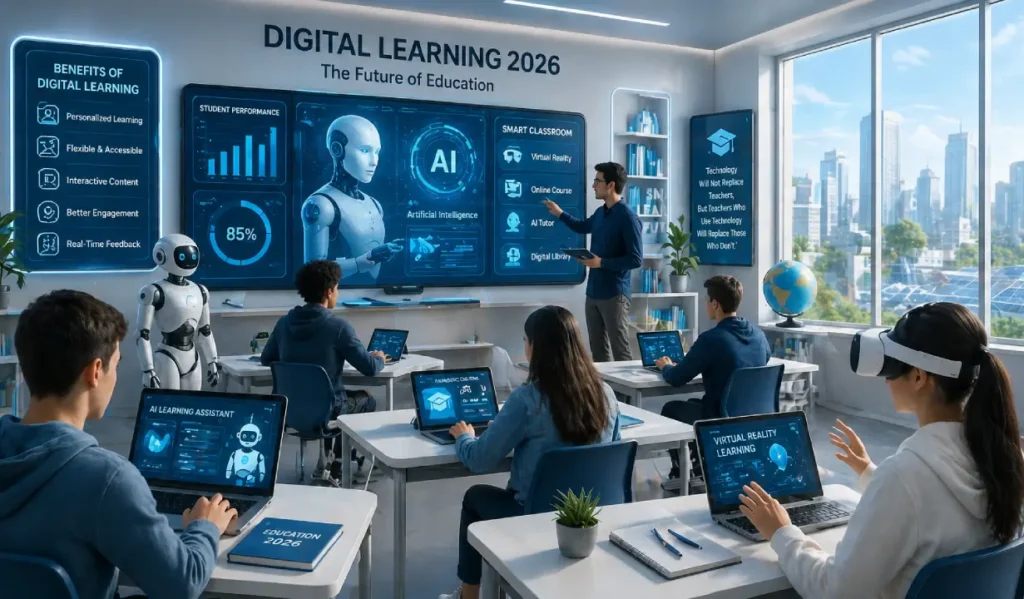
It includes:
- Online classes (Zoom, Google Meet)
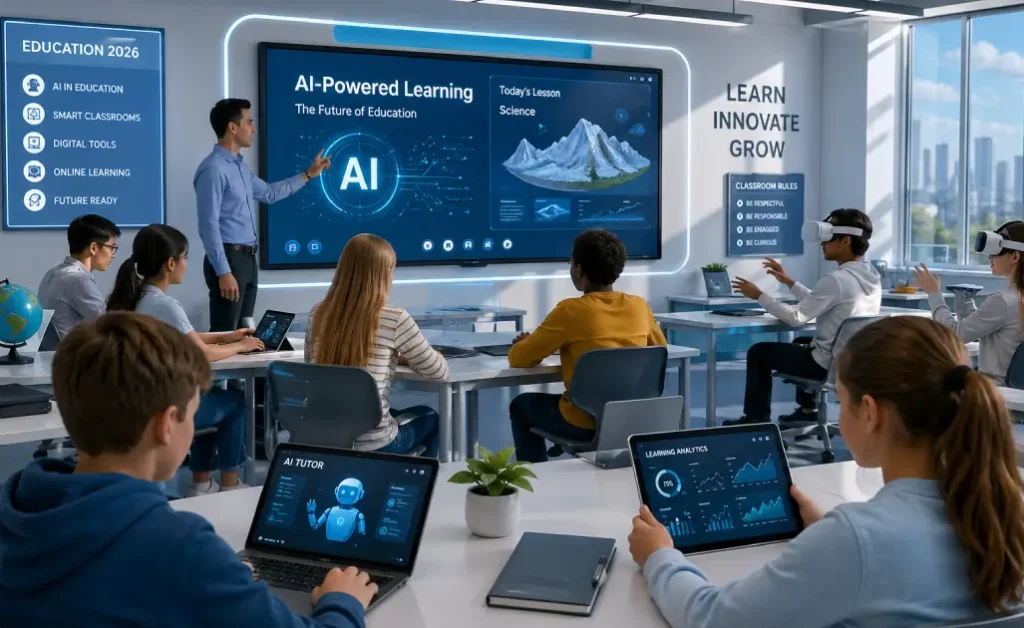
- AI learning tools
- Educational apps
- Smart classrooms
- Video lessons and e-books
- Virtual Reality (VR) learning
Related reading:
How Digital Technology is Changing Education in 2026
Why Digital Learning is Becoming the Future
The reason digital learning is growing is simple—it makes education easier and more flexible.
Example:
Earlier, if a student missed a class, they had to depend on notes or friends.
Now, they can simply:
- Watch recorded lectures anytime
- Relearn topics using apps
- Ask AI tools for explanations
This flexibility is changing the entire education system.
1. Learning is No Longer Limited by Time or Place
One of the biggest advantages of digital learning is freedom.

Example:
A student in a small village can now attend a live class from a top teacher in another city or country using the internet.
Result:
- No travel needed
- No location barrier
- Learning becomes global
This is a major reason online education platforms in 2026 are growing fast.
2. AI is Making Learning Smarter and Easier
Artificial Intelligence is one of the biggest changes in education today.
Example:
A student struggling with science can use an AI app that:
- Explains topics in simple language
- Gives diagrams and examples
- Suggests practice questions
- Tracks improvement automatically
This creates a personal learning system for every student.
Related blog:
Future of Education in 2026: Impact of AI on Students
Best AI Tools learning
3. Students Learn Better with Visual Content
Humans understand visuals faster than text.
Example:
Instead of reading about the solar system, students now:
- Watch animations
- Use VR headsets
- Explore planets in 3D
Result:
- Better understanding
- Strong memory retention
- More interest in studies
This is why smart learning systems in 2026 are becoming popular.
4. Education is Becoming More Personalized
Earlier, all students followed the same teaching style. Now, every student gets a different learning experience.
Example:
- Fast learners get advanced lessons
- Slow learners get extra practice
- AI adjusts difficulty level automatically
This makes education more effective and student-friendly.
5. Online Learning Platforms are Expanding Access
Digital learning platforms are replacing traditional coaching in many areas.
Example:
A student preparing for exams can:
- Attend live classes online
- Practice mock tests
- Get instant feedback
- Learn from multiple teachers worldwide
This is making e-learning systems in 2026 very powerful.
6. Teachers are Becoming Guides, Not Just Lecturers
Technology is not replacing teachers—it is helping them.
Example:
Teachers now:
- Use AI to check assignments
- Create digital lessons
- Track student progress easily
This allows teachers to focus more on explaining concepts clearly.
7. Real-Life Example of Digital Learning in 2026
Let’s understand it simply:
A student named Meera studies in 2026.
Her daily routine:
- Attends online + offline hybrid classes
- Uses AI apps for revision
- Watches VR science experiments
- Submits assignments online
- Joins group study sessions on video calls
This combination of digital + traditional education is the new normal.
Challenges of Digital Learning
Even though digital education is powerful, it has some challenges:
1. Distraction Problem
Social media and games can reduce focus during study time.
2. Health Issues
Long screen time can cause eye strain and fatigue.
3. Lack of Physical Interaction
Students may miss real classroom communication and teamwork.
4. Digital Gap
Not all students have equal access to the internet and devices.
Is Digital Learning Really the Future?
Yes—but with balance.
Digital learning is not replacing schools completely. Instead, it is creating a hybrid education system, where:
- Physical classrooms provide discipline and social learning
- Digital tools provide flexibility and personalization
- AI provides smart assistance
Related blog:
Smart Classrooms to AI Learning in 2026
Conclusion
Digital learning is clearly shaping the future of education in 2026. It is making learning more flexible, interactive, and personalized for students.
However, success in this system depends on how students use technology. If used properly, digital tools and AI can improve education significantly.
The future is not just digital or traditional—it is a smart combination of both.
Education in 2026 is simple: Learn anywhere, anytime, in your own way.
FAQs – Is Digital Learning the Future? (2026)
1. Is digital learning really the future of education in 2026?
Yes, digital learning in 2026 is becoming the future of education because it offers flexible, personalized, and technology-based learning through AI tools, online platforms, and smart classrooms.
2. How does digital learning impact students in 2026?
The impact of digital learning on students in 2026 is very strong. It helps students learn at their own pace, access global education, and use AI tools for better understanding and practice.
3. What are the main benefits of digital education?
The main benefits of digital education in 2026 include flexible learning, better visual understanding, AI-based personalized study plans, cost savings, and access to online learning platforms worldwide.
4. What are the challenges of digital learning for students?
Some challenges of online learning and digital education include distraction from social media, long screen time issues, lack of physical interaction, and unequal access to devices and internet.
5. Will digital learning replace traditional classrooms completely?
No, digital learning will not fully replace traditional education. In 2026, most schools follow a hybrid learning system, combining classroom teaching with digital tools and AI-based learning support.